
Musty odor that returns
A persistent smell after cleaning often points to damp drywall, insulation, or framing behind the surface.
Serving Modesto, California & surrounding areas
24/7 Emergency Response
If you smell musty odors, see staining, or had a recent leak, we inspect, contain, remove, and restore the affected area so you can get back to normal with a clear plan and documented results.
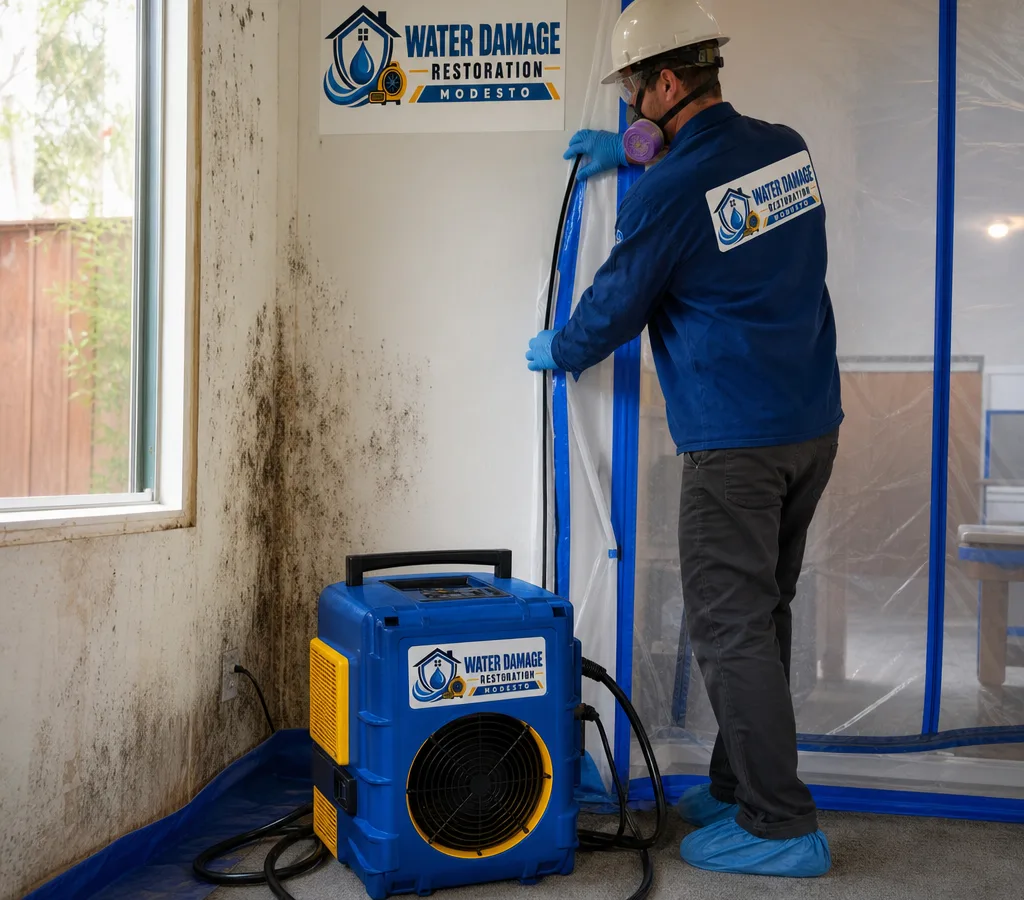
Searching for mold removal Modesto usually means one of two things: you found visible growth, or you suspect it after a water event. Either way, the goal is the same. Remove contaminated materials safely, clean remaining surfaces correctly, and fix the moisture problem that allowed mold to grow in the first place.
Our team at Water Damage Restoration Modesto handles residential and commercial mold cleanup across Modesto, CA. We focus on practical steps that hold up in real buildings: careful inspection, controlled demolition when needed, proper drying, and rebuild-ready surfaces.
In the Central Valley, long hot stretches followed by cooler nights can drive condensation in tightly closed homes, and irrigation or plumbing leaks can stay hidden in walls longer than people expect. That is why we treat mold as a moisture problem first and a cleaning problem second. If you only wipe what you can see, it often comes back.
If the mold started after a leak, overflow, or soaked building materials, the same crew can coordinate the moisture work and repairs so the project does not stall. For broader recovery after a water event, many clients also use our water damage restoration service so drying, cleanup, and restoration stay under one scope.
A proper mold remediation job is more than spraying chemicals. The scope depends on where the growth is, what materials are affected, and whether spores can spread into other rooms.
Common steps we include on mold removal Modesto CA projects:
You should expect us to explain what is being removed versus cleaned, and why. In older Modesto neighborhoods where homes may have had multiple remodels, we also watch for hidden cavities and layered materials that can conceal dampness.
A persistent smell after cleaning often points to damp drywall, insulation, or framing behind the surface.
If a supply line, water heater, or dishwasher leaked, mold can start inside wall cavities even when the outside looks dry.
Discoloration, blistering, or soft drywall usually means the material stayed wet long enough to degrade.
When irritation or congestion is tied to a specific area, we focus inspection on moisture pathways and hidden voids.
Poor ventilation and condensation can feed mold around vents, registers, and bathroom walls if humidity stays high.
The sequence protects adjacent rooms, addresses contaminated materials, and corrects the moisture conditions behind the growth.
We inspect the affected areas, check for moisture, and outline what needs cleaning versus removal. You get a clear scope so decisions are not made mid-project.
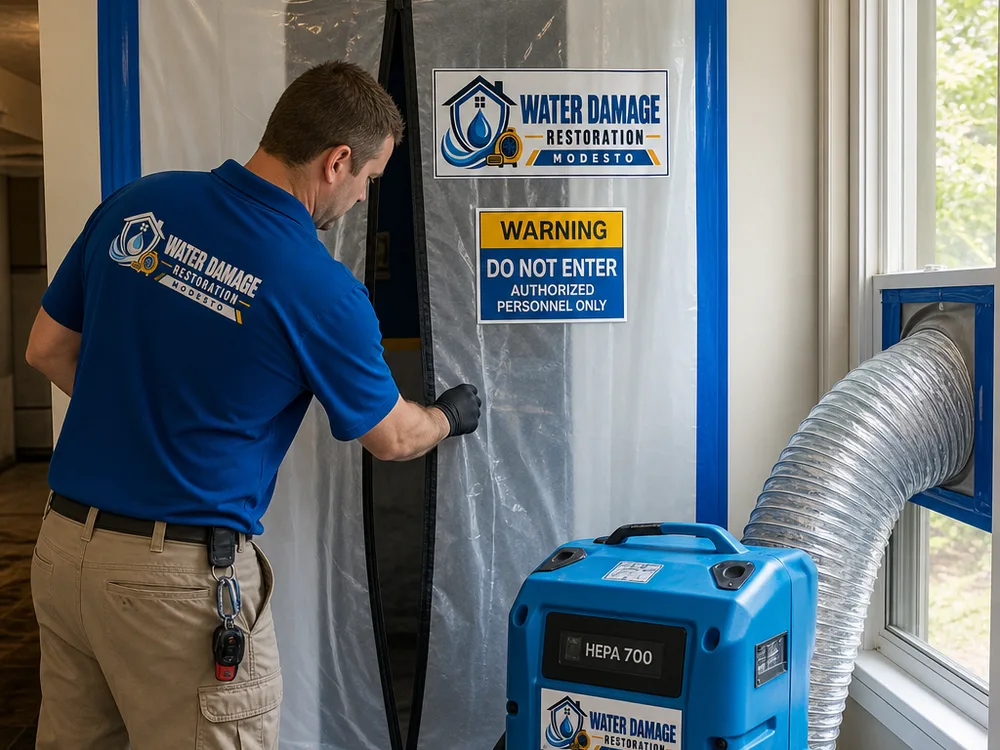
We establish a controlled work zone, protect floors and contents as needed, and set up HEPA filtration so adjacent rooms stay protected.
We remove contaminated porous materials when required, then HEPA vacuum and clean remaining surfaces. The goal is to leave structure that is clean and dry enough for repairs.
If materials are still wet, we dry them with professional equipment and address the moisture source. Without moisture control, remediation is temporary.
After remediation, we can coordinate repairs so you are not left with open walls. If the issue is part of a larger loss, the same plan can align with your overall restoration timeline.
Most mold removal jobs in Modesto typically range from about $900 to $6,000+, depending on how widespread the growth is and how much material must be removed. A small, contained area—for example, limited drywall in a bathroom—is often at the lower end, while multi-room or HVAC-involved projects trend higher.
Price is driven by the size of the affected area, how much is hidden in wall cavities, the need for containment and HEPA air scrubbing, access such as crawlspaces and tight closets, and whether drying and rebuild work are included. The exact cost is confirmed after an on-site inspection and written scope.
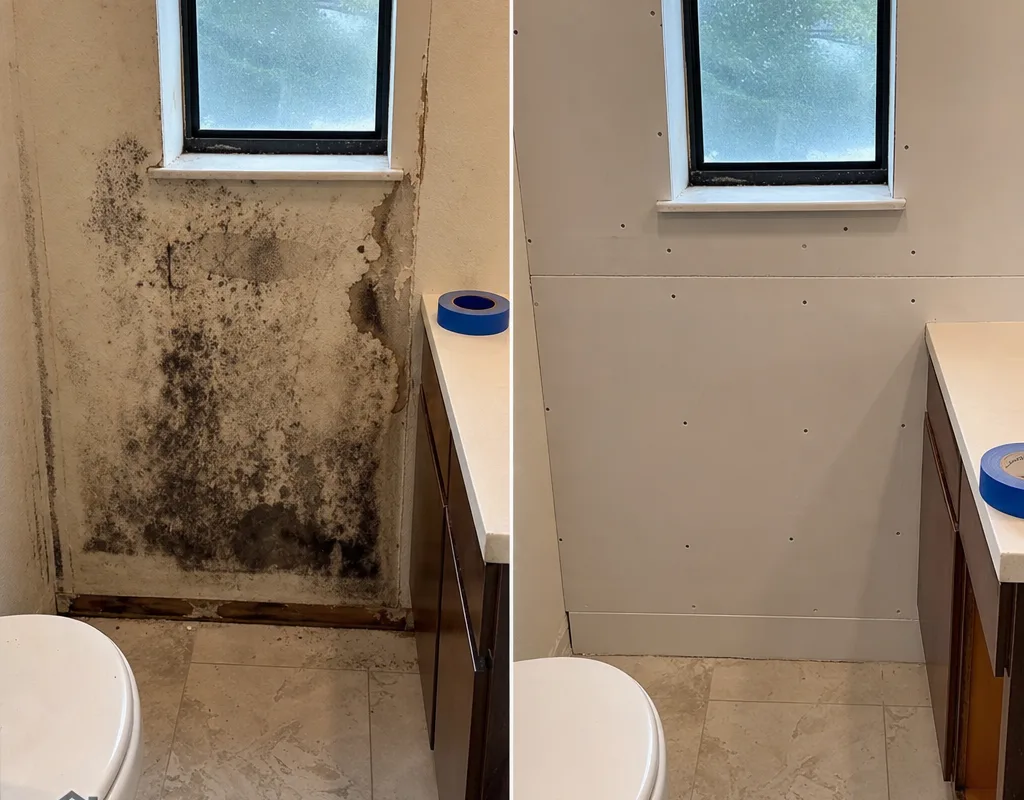
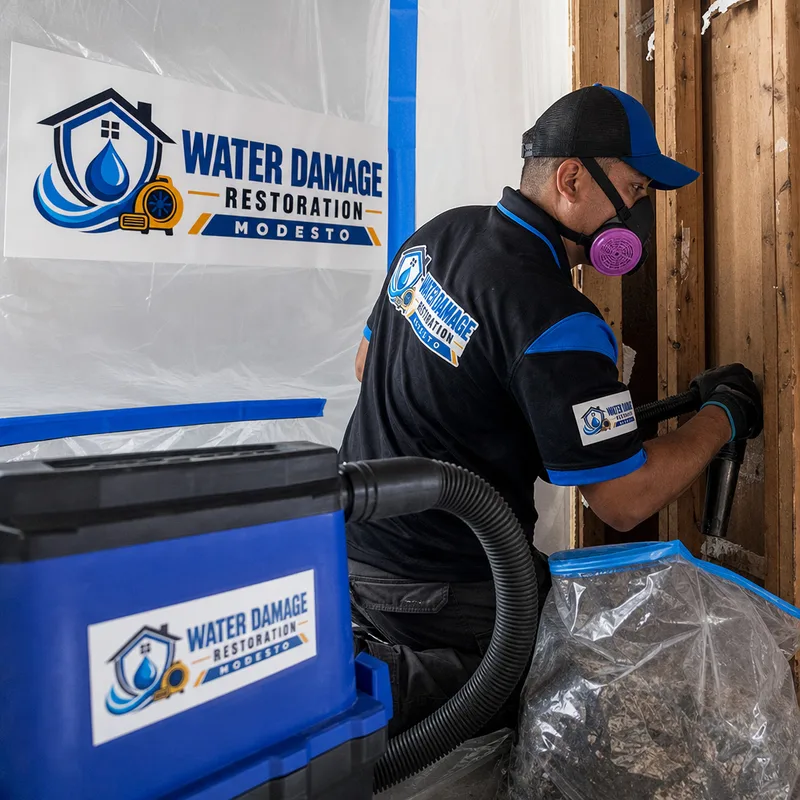
“We had a slow leak behind the washing machine and didn't realize the drywall was affected until the smell started. The crew explained what had to be removed, set up containment, and left the space clean and ready for repairs.
“They found moisture in a wall that looked fine from the outside. Once they opened it up, the mold made sense. The plan was straightforward and the work area was kept contained the whole time.
Start times depend on current workload and the size of the affected area, but urgent situations are typically prioritized because mold is tied to active moisture. If there was a recent leak or saturated materials, getting containment and drying started quickly can reduce how much has to be removed.
Non-porous and semi-porous surfaces can often be cleaned after proper containment, while porous materials like drywall, insulation, and carpet padding are often removed when they are contaminated. The decision is based on material type, how long it stayed wet, and whether growth is on the surface or embedded.
It can be, when containment and air control are done correctly and the work zone is kept isolated. We typically recommend keeping children and pets out of the contained area and following re-entry guidance after cleaning and drying are complete.
Bleach may lighten staining, but it is not a reliable fix for porous materials like drywall because it does not fully penetrate the material and it does not solve the moisture source. Professional remediation focuses on containment, removal of contaminated porous materials when needed, and drying the structure.
Bathrooms, laundry areas, kitchens, and garages are common because they combine plumbing, humidity, and sometimes limited ventilation. We also see mold behind baseboards after leaks and in closets on exterior walls when condensation is recurring.
Yes, when the work relates to a covered loss, we can document observations, scope, and job progress with photos and notes so the claim has clear backup. Coverage varies widely by policy and cause of loss, so we keep the paperwork focused on what was found and what work was required.
Tell us what you are seeing and where it is happening. We will schedule an inspection in Modesto, explain what needs to be removed versus cleaned, and provide a written scope so you can move forward with confidence.