
✓
Moisture source investigation
We look for conditions that feed mold: elevated moisture in building materials, condensation patterns, and areas that stay damp. Fixing the water source is what prevents repeat problems.
Serving Modesto, California & surrounding areas
24/7 Emergency Response
If you smell a musty odor, see staining, or have had leaks or flooding, a proper inspection can confirm what is growing, where the moisture is coming from, and what to do next.
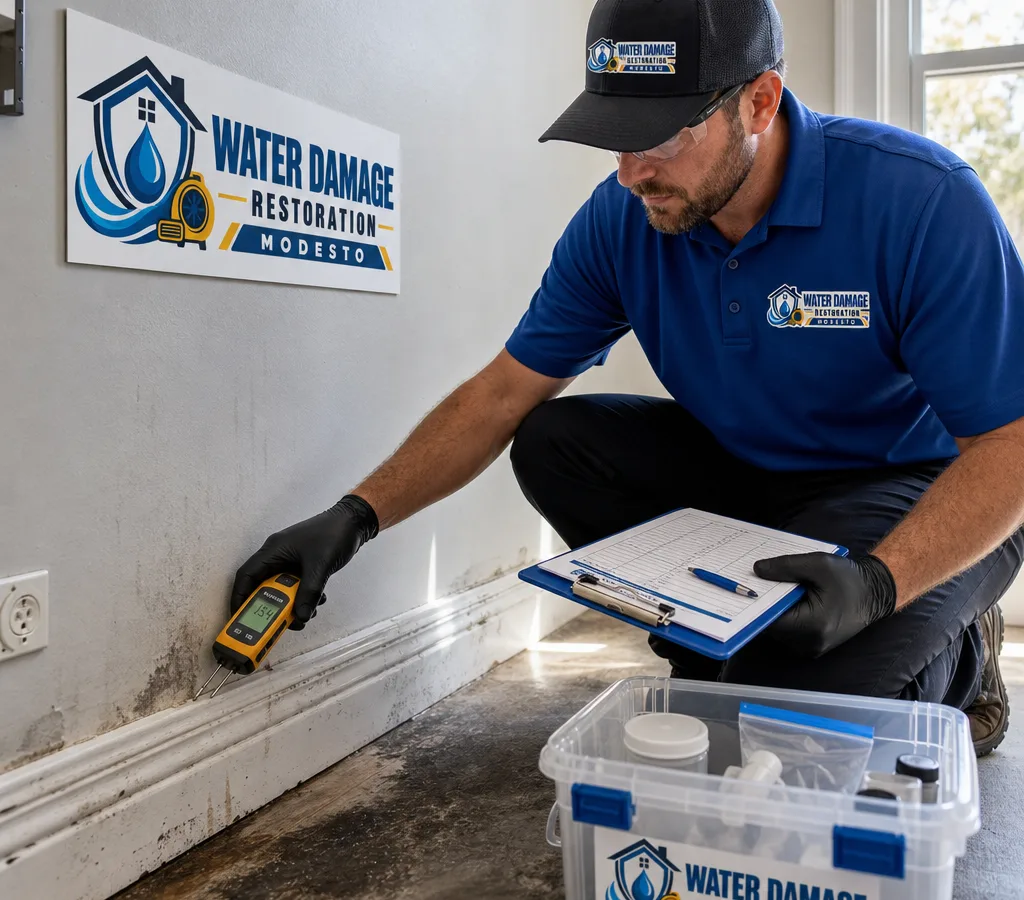
A mold problem is usually a moisture problem first. A mold inspection is meant to answer practical questions: Is there mold growth? Where is it coming from? How far has it spread? What areas need to be opened or dried? When you are searching for mold inspection Modesto CA, you are usually trying to avoid two bad outcomes: paying for unnecessary demolition, or missing hidden growth that keeps returning.
Our team at Water Damage Restoration Modesto inspects homes, apartments, and commercial spaces across Modesto. We focus on finding the moisture source and mapping conditions that support growth, not guessing from surface staining alone. You will get plain-language findings you can act on, plus documentation you can share with a landlord, property manager, or contractor if you decide to move forward with remediation.
Common reasons people schedule an inspection include recent plumbing leaks, roof leaks, HVAC condensate issues, water intrusion around windows, or lingering odors after a past cleanup. Even without visible growth, elevated moisture in drywall, trim, or subflooring can point to a hidden issue worth confirming.
We look for conditions that feed mold: elevated moisture in building materials, condensation patterns, and areas that stay damp. Fixing the water source is what prevents repeat problems.
Bathrooms, laundry areas, kitchens, closets on exterior walls, around windows, and near HVAC components are inspected carefully for staining, microbial growth, and material deterioration.
Sampling is used when the result changes the plan, such as confirming suspect material, checking an area that cannot be opened yet, or establishing a baseline for sensitive occupants.
You receive a clear summary of findings, photos when relevant, and practical next steps. If more investigation is needed, we explain what should be opened and why.
Some stains are not mold, and some mold is hidden. We explain what we can confirm during the visit, what requires opening cavities, and what is best handled by a qualified remediator.
In the Central Valley, warm weather and indoor cooling can create condensation in the wrong places, especially where airflow is limited. Mold also shows up after small, repeated moisture events: a slow supply-line drip under a sink, a tub splash zone that soaks drywall, or a vent fan that does not move enough humid air out.
A thorough inspection looks beyond what is easy to see. We pay close attention to:
Different parts of Modesto have different building styles and ages, and that affects where problems show up. For example, older neighborhoods like La Loma and College Area can have older plumbing runs and past repairs that conceal slow leaks, while newer subdivisions around North Modesto often have tighter envelopes that can trap humidity if ventilation is undersized or blocked.
If your concern started after a leak or overflow, the fastest way to reduce risk is to confirm whether building materials actually dried. If you also need help addressing the underlying water event, our team can coordinate with Water Damage Restoration so the inspection findings translate into a practical plan.
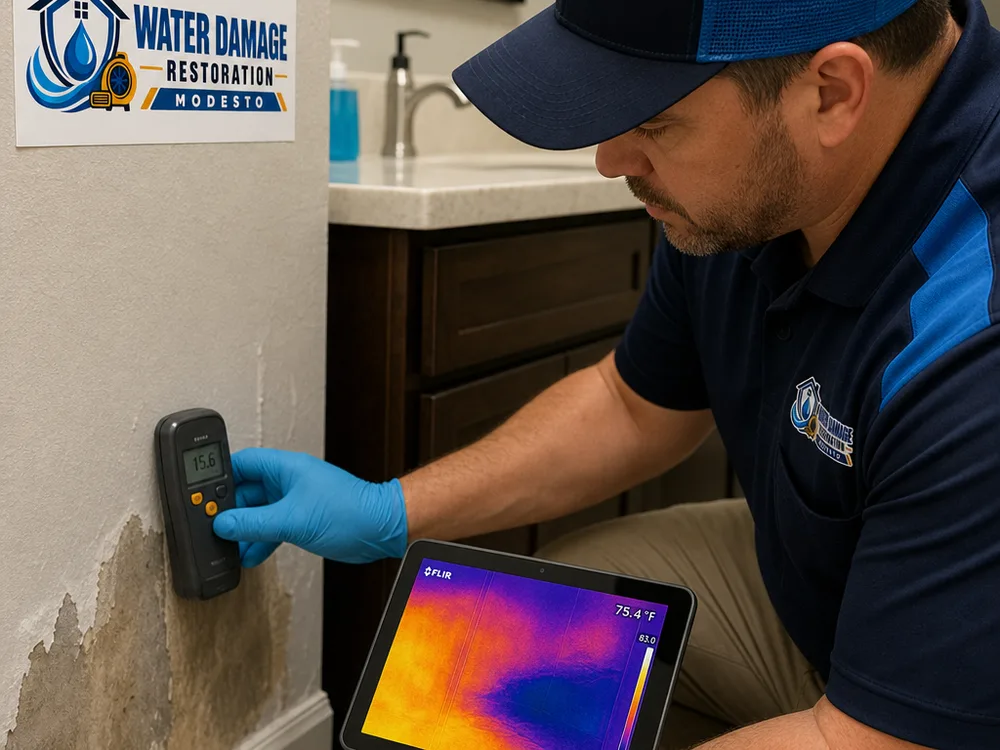
A focused sequence connects what you have noticed with measured moisture conditions, targeted testing when useful, and practical next steps.
We start with what you have noticed: odors, visible spots, recent leaks, where symptoms are strongest, and any past repairs. This helps target the inspection instead of wandering room to room.
We inspect areas where mold commonly develops and where moisture tends to collect, noting staining, damaged finishes, and ventilation issues that keep surfaces damp.
We use moisture meters and other non-destructive tools to identify elevated moisture in drywall, trim, and other materials, and to trace patterns that suggest the source.
When results will change the next step, we take targeted samples and document locations and conditions so results make sense in context.
You get a clear summary of what was found, likely contributing factors, and what a reasonable next step looks like: repair, containment and remediation, further opening, or simple prevention improvements.
Mold inspection in Modesto typically ranges from about $250 to $750, depending on the size of the property and whether testing is included. A basic inspection for a small home is often at the low end, while larger homes, multi-unit properties, or inspections that include multiple samples and detailed documentation tend to run higher.
Final pricing depends on square footage, the number of areas of concern, access to attics or crawl spaces, how much moisture mapping is needed, and how many samples are appropriate for the questions you need answered. The exact cost is confirmed after a quick intake and the on-site inspection plan.
“We had a musty smell that kept coming back after a bathroom leak. The inspection found moisture behind the vanity wall and explained what needed to be opened and dried. Having it mapped out saved us from tearing out more than necessary.
“I needed documentation for a rental unit and wanted answers fast. They were straightforward about what they could confirm during the visit, took photos, and gave clear next steps.
Scheduling depends on current demand, but many inspections can be booked quickly because the visit is non-destructive and focused. Share your symptoms, property type, and whether there was a recent leak so we can plan the right time window and bring the right tools.
You need testing when the result changes the decision, such as confirming suspicious material, checking a hidden area you cannot open yet, or documenting conditions for a landlord, buyer, or property file. If there is clear, visible growth and a known moisture source, testing may not change the remediation plan, and we will tell you that.
When they are safely accessible, yes, because those spaces often reveal roof leaks, ventilation issues, or elevated moisture that affects the living area above. If access is blocked or unsafe, we document the limitation and recommend practical options for gaining access or confirming conditions.
Do not scrub or spray chemicals on suspect areas right beforehand, because it can remove evidence and affect sampling. Clear access to bathrooms, under-sink cabinets, the HVAC closet, and any area where you have seen staining or smelled odors, and gather notes on past leaks or repairs.
The most reliable way to reduce risk is to identify and fix the moisture source and handle any contamination with the right containment and cleaning methods. If sampling is performed, lab results can help categorize what is present, but health risk still depends on exposure, the amount of growth, and individual sensitivity, so we focus on actionable building-side steps.
We can explain the typical remediation scope and what to look for in a qualified remediation plan, including containment, filtration, and post-work verification considerations. If you want to move forward, we can also discuss coordinating the next steps so repairs address both the moisture cause and any affected materials.
Tell us what you have noticed and where. We will help you schedule a mold inspection, identify the most likely moisture source, and outline the next steps so you can make decisions with confidence.